
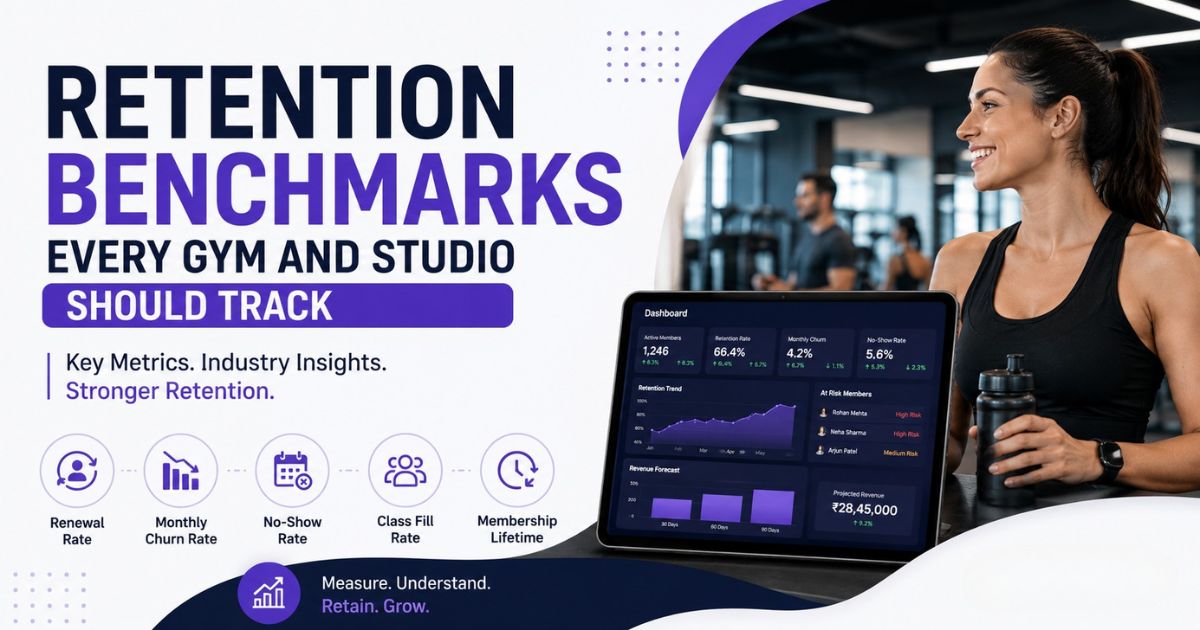
Retention Benchmarks Every Gym and Studio Should Track
Why Gym Retention Benchmarks 2026 Matter for Revenue Growth
Retention benchmarks tell you one thing fast: are you keeping members, or losing them quietly? Most gym owners track revenue every day, but few track retention with the same discipline. That gap is costly. A member who churns doesn’t just leave — they take their referrals, their lifetime value, and their word‑of‑mouth with them. That’s why gym retention benchmarks 2026 matter more than ever. They reveal whether your business is thriving or quietly leaking members, and they set the standard for what “good” looks like in today’s competitive fitness market.
This guide breaks down the retention benchmarks that matter most in 2026. You'll see what "good" looks like, how to measure your own numbers, and how AI-powered tools are changing what's possible.
What Are Retention Benchmarks?
Retention benchmarks are target numbers. Fitness businesses use them to judge member loyalty. They include:
• Renewal rate
• Monthly churn rate
• Average membership lifetime
• Class fill rate
• No-show rate
Without benchmarks, you're guessing. With them, you know exactly where you stand.
Core Retention Benchmarks to Track
1. Renewal Rate
This is the share of expiring memberships that get renewed. Renewal rate varies a lot by membership type, business model, and market. Treat it as an internal KPI, not a fixed target to hit.
For reference, the Health & Fitness Association's 2025 benchmarking report found an overall 66.4% member retention rate across its participating businesses.
2. Monthly Churn Rate
Churn is the share of active members you lose in a given period. There's no single benchmark here either, since it depends on gym type and market. As a rough guide, many operators aim for under 5% monthly churn. Higher churn is worth investigating. Look at onboarding, engagement, pricing, and member experience.
3. No-Show Rate
No-shows hurt class utilisation and weaken engagement. Automated reminders help. They prompt members before class starts, so fewer sessions get missed.
One Fitzpot customer, a yoga studio, saw a 40% drop in no-shows after turning on automated reminders. Results will vary by business.
4. Class or Session Fill Rate
Full classes build energy and community. Both drive retention. Waitlist automation helps too. It fills last-minute cancellations, so classes stay full instead of half-empty. A studio that tracks fill rate weekly can spot underperforming time slots early, then adjust scheduling or promotions before those classes get cancelled altogether.
5. Average Membership Lifetime
This measures how long members stay active on average. Track it alongside churn and renewal rate. Together, they give you a clear picture of long-term retention and lifetime value.
Why Most Gyms Miss Their Own Benchmarks
Spreadsheets can't flag a member who's about to leave. Neither can sticky notes. By the time a front-desk team spots a drop in attendance, that member has often already decided to cancel. Benchmarks only help if you measure them accurately and act early. That takes data, not memory.
How AI Closes the Retention Gap
Fitzpot's AI Insights layer is built to catch churn before it happens, not after.
•Churn Prediction flags at-risk members up to 30 days in advance. It scores them by attendance drop-off, expiring memberships, and missed classes.
• Campaign Recommendations suggest the right WhatsApp message for the right member group. No more generic blasts to everyone.
• Revenue Forecasting projects revenue 30, 60, and 90 days out. You see the financial impact of retention trends before they hit your books.
• Anomaly Detection catches sudden drops in attendance or spikes in cancellations. Nothing slips through unnoticed.
•WhatsApp Automation sends renewal reminders, check-ins, and win-back messages automatically. It closes the loop between insight and action.
Together, these features change what retention means for you. It stops being a number you review once a month. It becomes something you can influence every day.
What a Modern, AI-Powered Platform Looks Like
Traditional gym software shows you what already happened. Think last month's cancellations, or last quarter's revenue. A modern, connected platform goes further. It combines membership data, payments, bookings, and communication in one place. Then it uses that view to predict what's next: who's at risk, which classes are underbooked, and where revenue is heading.
That's the shift from simple reporting to real business intelligence. You spot the member who's about to churn while there's still time to reach out. Not after they've already cancelled.
How Often Should You Check These Numbers?
Weekly is best. Monthly reviews often catch problems too late, after several members have already cancelled. A quick Monday check of renewal rate, churn, and no-shows takes a few minutes. It can save you a much bigger drop later.
Setting Your Own Retention Targets
Follow these steps to set realistic benchmarks for your business:
1. Pull your last 6 months of renewal and cancellation data.
2. Calculate your current renewal rate and monthly churn rate.
3. Compare your numbers against the references above.
4. Set a 90-day target — even a five-percentage-point improvement in renewal rate can meaningfully increase the number of members retained and the recurring revenue base.
5. Track weekly, not just monthly. Weekly checks catch drift early.
The Bottom Line
Retention benchmarks only work if you measure them consistently and act before members walk away. Fitzpot brings bookings, memberships, payments, WhatsApp automation, and AI-driven retention insights into one intelligent platform. You work from real signals, not guesswork. The gyms and studios that grow fastest in 2026 won't be the ones with the most members. They'll be the ones who know their numbers every week, and act on them before it's too late.