
Why Reducing Member Churn in Gyms and Wellness Businesses Matters
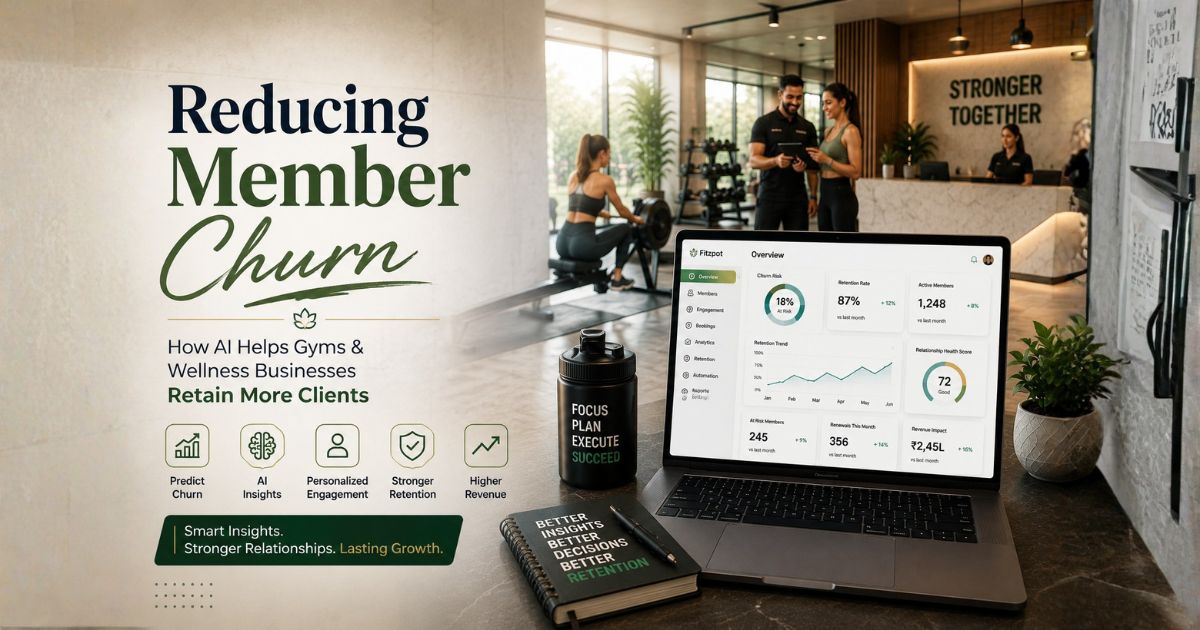
Reducing member churn in gyms and wellness businesses is one of the most effective ways to achieve long-term growth and improve profitability. Every month, some members quietly stop attending, while others cancel their memberships without any warning. Most businesses only discover the problem after a failed payment or cancellation request, when it is already too late to retain the member. This guide explains why churn happens, the early warning signs to watch for, and how a smarter retention strategy can help you identify at-risk members, increase engagement, and build lasting customer loyalty.
What Is Churn, and Why Does It Quietly Kill Growth?
Churn is simple to define. It's how many members stop using your services.
But its impact is not simple at all.
• Getting new members costs a lot.
• Replacing a member costs more than keeping one.
• High churn means you work harder just to stay flat.
Gyms, studios, spas, and clinics see this often. A small drop in monthly churn adds up fast. Over a year, it can mean a big revenue jump.
The exact number varies by business. But the pattern stays the same. Retention protects growth better than new sign-ups alone.
Why Reducing Member Churn Is So Hard Without the Right Data
Most churn doesn't happen suddenly. It builds slowly.
• A member skips two classes in a row.
• A client's booking frequency quietly drops.
• A renewal date passes. No one follows up.
• A regular stops replying to your check-ins.
On their own, these signals look harmless. Together, they're a warning.
Front-desk staff can't track this. Neither can a spreadsheet. There are too many signals, across too many members, every day. By the time a manager notices, the member has already checked out.
How Fitzpot Uses AI to Catch Churn Before It Happens
This is where churn reduction stops being guesswork. Fitzpot's AI Recommendation Engine and Predictive Analytics work in the background. They watch the same signals a sharp manager would. But across every member, all the time.
Traditional Retention vs. AI-Powered Retention
Here's a quick comparison. It shows what changes when AI takes over retention:
Traditional Retention AI-Powered Retention
Notices cancellations Predicts churn
Manual follow-ups Automated engagement
Static reports Predictive Analytics
Generic reminders Personalized recommendations
Historical data Relationship Health Score
Guesswork AI Business Intelligence
Relationship Health Score
Fitzpot's Relationship Health Score combines four signals into one number. Attendance, booking frequency, engagement, and communication. It flags members drifting away early. Long before they stop booking. Not after they cancel.
Predictive Analytics for Early Warning
Fitzpot's Predictive Analytics doesn't just report the past. It forecasts what's likely to happen next. A member who's slowing down gets flagged early. While there's still time to act.
AI Recommendation Engine
The AI Recommendation Engine looks at a client's history and goals. It suggests the right follow-up. A renewal offer. A complementary service. Or a personalized check-in. Not a generic blast that gets ignored.
AI Wellness Companion
The AI Wellness Companion keeps the relationship warm. Across the entire client lifecycle:
• Appointment reminders sent automatically
• Personalized follow-ups after missed sessions
• Package renewal prompts before expiry
• Wellness recommendations based on activity
• Ongoing engagement tracking
From Reporting to Business Intelligence
Traditional reporting tells you what already happened last month. That's not enough to reduce churn. By the time a report shows a drop in visits, the member may already be gone.
Fitzpot is built as Business Intelligence, not just reporting. It explains why attendance dropped. And predicts what happens next. This is the core of Fitzpot's Revenue Intelligence. It forecasts revenue. It flags churn risk. It predicts attendance. It recommends pricing and campaigns. Not just historical numbers.
Managers see this through the Executive Dashboard. It covers therapist utilization, Revenue Intelligence, and Wellness Intelligence. Plus membership analytics, retention, service performance, and branch comparison. All in one view.
What a Modern, Unified Platform Looks Like
Most gyms and studios use several disconnected tools. A spreadsheet for attendance. WhatsApp for reminders. A separate CRM for follow-ups. Gaps between these tools are exactly where churn hides.
A modern AI-powered Wellness Intelligence Platform closes those gaps. It keeps everything in one place:
• Attendance, bookings, and payments in a single record per client
• Automated reminders and renewal prompts, without manual follow-up
• Burnout Risk Monitoring for staff and client engagement patterns alike
• A single Corporate Dashboard or Individual Wellness Score view
• Marketplace Integration to sell packages, products, and services to at-risk clients
The result isn't just fewer disconnected tools. It's a system where retention becomes part of daily work. Not a separate task nobody has time for.
Practical Steps to Start Reducing Member Churn Today
You don't need to overhaul everything at once. Start here:
1. Track attendance patterns, not just totals. A drop in frequency matters more than one missed visit.
2. Automate renewal reminders. Don't expect members to remember their own expiry dates.
3. Personalize your follow-ups. A generic discount code converts worse than a personal message.
4. Watch for silence. A member who stops replying is often already halfway gone.
5. Act on early signals, not just cancellations. Once someone formally cancels, the save rate drops sharply.
The Bottom Line
Reducing member churn isn't about chasing every member by hand. It's about giving your team visibility. And enough time to act.
With AI Insights, a Relationship Health Score, and an AI Wellness Companion working in the background, this becomes possible. Gyms, studios, and wellness centers catch at-risk members early. And keep more of them for years, not months.
Fitzpot brings all of this into one intelligent platform. Retention stops being a guessing game. It becomes a system.