Fitness Trends in India 2026
What Gym & Studio Owners Need to Know
India’s fitness industry is going mainstream, and fitness trends in India 2026 are reshaping not just how people in big cities work out, but how the entire country lives, spends, and stays healthy. What was once a niche habit is now a nationwide movement, driven by policy changes, rising incomes, and growing awareness of wellness. From boutique studios to AI-powered coaching, the fitness economy is evolving into a cultural force that influences lifestyles across Tier-1 metros and Tier-3 towns alike.
India's fitness economy was worth about ₹16,200 crore in 2024. It could reach ₹37,700 crore by 2030. A big policy change helped: in September 2025, the GST on gyms and fitness services dropped from 18% to 5%. This lower tax makes fitness more affordable. It should help gyms grow beyond the big cities.
If you run a gym, studio, or wellness business in India, you need to know where the market is headed. Missing these shifts could mean falling behind.
Here are the trends shaping Indian fitness in 2026 — and what they mean for your business.
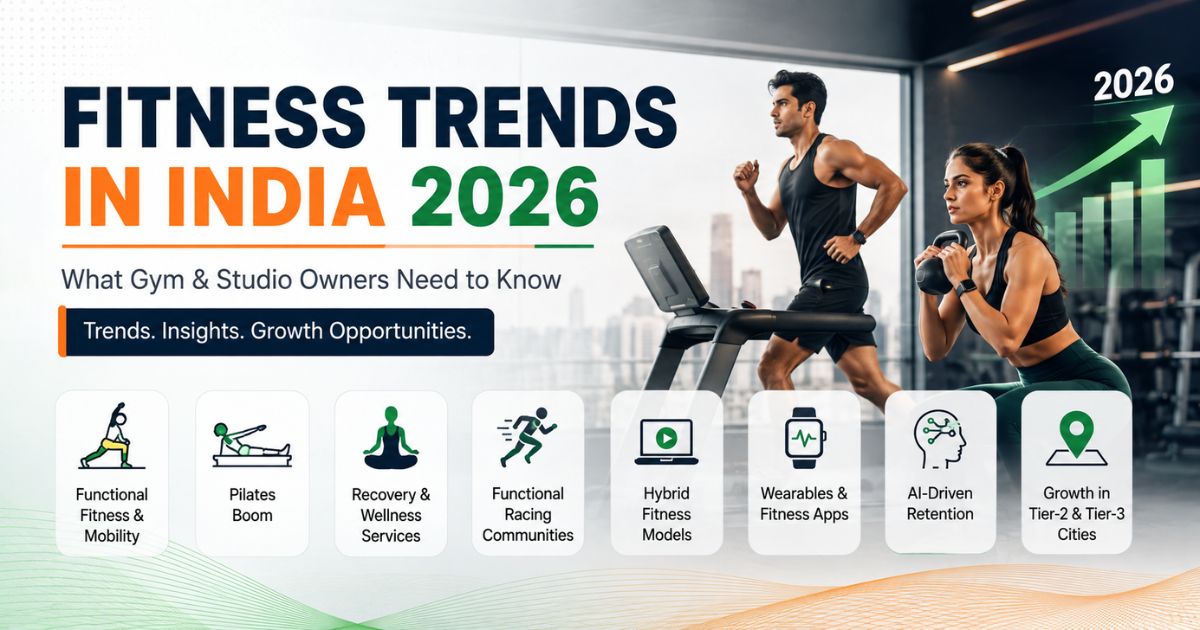
1. Functional Fitness and Mobility Are Growing
For years, Indian gyms copied the American style: high intensity, high volume. That's changing now.
Functional fitness is on the rise alongside regular gym workouts. The ACSM ranks it #10 among the world's top fitness trends for 2026. It covers strength, power, mobility, and endurance — movements built for real life, not just the gym. In India, Deloitte's research shows strong growth in boutique formats too, like HIIT, yoga, and Pilates.
Why is this happening? Deloitte estimates that nearly 820 million Indians aged 18–62 don't get enough physical activity. Many have desk jobs. They want movement that undoes the damage of sitting all day — not workouts that add more strain on top of it.
What this means for your business: If your gym only offers one type of workout, think about adding a mobility or functional class. Studios with a mix of formats can reach people who don't want a typical gym-only setup.
2. Pilates Has Arrived — and It's Growing Fast
Deloitte expects India's boutique fitness segment — including Pilates studios — to grow at 18.8% per year. That's one of the fastest-growing categories in Indian fitness. Yoga remains the steady favorite, especially for people who work out at home without paying for a membership.
What this means for your business: Pilates and yoga studios aren't just a luxury for big-city elites anymore — they're a real growth opportunity. If you have spare space, consider adding Pilates or reformer classes. Sell them as class packs, not long-term memberships. That's how most Indian customers prefer to buy boutique fitness.
3. Recovery and Wellness Services Are Growing in Demand
As fitness becomes more holistic, people want more than just workouts. They're asking for recovery and wellness services too. Mobility work, recovery sessions, and other add-ons give gyms new ways to serve members.
What this means for your business: Add-ons like stretch therapy, mobility sessions, and guided cool-downs can bring in new revenue. Test what your members actually want first. Then price and package these services based on real demand.
4. Fitness Races Are Building Real Communities
Global functional fitness races are taking off in India. HYROX Delhi 2026 drew 8,817 athletes. That shows how fast these events are growing. Ironman 70.3 Goa has also grown each year — from 897 participants in 2023 to 1,200 in 2024.
What this means for your business: Race-prep bootcamps and training groups tied to these events build loyalty and word-of-mouth growth. This works especially well in cities with active running or triathlon communities.
5. Hybrid Fitness Is Now the Default
Mixing in-person and online workouts under one membership isn't a pandemic leftover anymore — it's what members expect. Flexibility isn't a bonus feature now; it's the baseline. Home fitness equipment has also gotten good enough to compete with gym setups for casual users.
What this means for your business: If your studio doesn't offer online or hybrid options, you're offering less than what customers now expect. Even one simple Zoom class can help you keep members who travel or have unpredictable schedules.
6. Wearables and Apps Are Changing How People Engage
More people are using fitness trackers and apps to monitor their workouts and progress. The ACSM ranks wearable technology as the #1 fitness trend in the world for 2026. Deloitte also points to wearables, apps, and AI-powered coaching as key trends shaping India's fitness market.
What this means for your business: Members expect a connected experience. Attendance tracking, digital progress reports, and automatic reminders can help your gym fit into this larger digital fitness world.
7. AI-Powered Retention Is the New Competitive Edge
The real trend in 2026 isn't one workout style — it's smarter operations. Personalized plans, better recovery methods, and AI coaching are replacing the old "just push harder" mindset.
For gym owners, this matters most for retention. It means knowing which members might cancel before they actually do — not finding out after your renewal numbers drop.
What this means for your business: Keeping a member is usually cheaper than replacing one. The gyms winning in 2026 use data — like attendance drop-offs and missed renewals — to step in early, before a member walks away for good.
8. Tier-2 and Tier-3 Cities Are the Next Big Opportunity
The GST cut made memberships cheaper. Awareness is spreading beyond the big metros. Smaller cities are now driving real growth in the fitness industry.
India had about 46,500 commercial fitness facilities in 2024. That number could reach 65,500 by 2030. Paid gym memberships are following the same path — expected to hit 23.3 million by 2030, growing fastest outside Tier-1 cities.
What this means for your business: If you're opening a gym outside a major metro, you're entering at the right time — not too late. But price matters more in these markets. Easy payment options like UPI and flexible plans will matter more than they do in a metro gym.
How Gym and Studio Owners Can Act on These Trends
Spotting a trend is the easy part. Turning it into action — without creating extra chaos — is harder. Here are a few practical steps:
- Diversify your classes (functional, mobility, Pilates) without juggling separate booking systems for each one.
- Price add-ons separately. Don't hide recovery services inside a general membership fee.
- Offer hybrid access so members don't have to choose between being a "gym member" or an "app user."
- Track renewals and attendance so you can catch at-risk members weeks before they cancel — not after.
- Make payments easy. UPI-first billing matters even more as you grow into price-sensitive Tier-2 and Tier-3 markets.
This is exactly what platforms like Fitzpot are built for. Instead of managing class bookings on one app, payments on another, and WhatsApp reminders by hand, Fitzpot brings scheduling, UPI and card billing, membership management, and AI churn alerts into one dashboard. That way, you can keep up with these trends without adding three new subscriptions — and a spreadsheet — to manage them.
Final Thoughts
India's fitness industry in 2026 isn't about one trendy workout. It's about a bigger shift toward sustainability, personalization, and smarter business operations. Real changes — like the GST cut and rising incomes in smaller cities — are backing this shift up.
The gyms and studios that grow fastest won't just offer the trendiest classes. They'll run their business with the same intelligence their members already expect from their own fitness apps and wearables.