Automated Follow-Ups: How Fitness Businesses Turn Missed Conversations Into Retained Members
Every gym, studio, and wellness business loses money in the same quiet way. A lead never gets a second message. A member's renewal reminder never goes out. A client misses three sessions and nobody notices until it's too late. None of these feel like a big problem on their own. But small misses like this add up every month—unless you have automated follow-ups in place to catch them before they slip away.
Automated follow-ups fix this. Instead of hoping a staff member remembers to call someone back, a system remembers for you. It sends the right message at the right time, every time — without adding more work for your team.
This article explains what automated follow-ups are, why they matter so much for gyms and wellness businesses, and how to set one up.
What Are Automated Follow-Ups?
Automated follow-ups are messages that go out on their own, at the right moment, without a person having to remember to send them. They can go out through WhatsApp, SMS, or email.
Instead of a staff member keeping track of who needs a message, a system watches for certain events — like a missed class or an expiring membership — and sends the right message automatically.
Common events that can trigger a message:
• A lead fills out a form but never books a class
• A membership is about to expire in 3, 7, or 14 days
• A client hasn't visited in 10+ days
• A payment fails
• A class or appointment is coming up (reminder)
• A session gets cancelled and needs to be rebooked
Why This Matters So Much for Gyms and Studios
Gyms, studios, trainers, and wellness centers all depend on repeat business — memberships, packages, and rebookings. That means every member has to choose to stay, again and again. Here's why follow-ups matter so much:
1. Members leave quietly.
Members almost never cancel with a big announcement. They just stop showing up. By the time staff notice, the member has often already decided to leave — and a late “we miss you” message rarely brings them back.
2. Leads lose interest fast.
Someone asking about a trial class today is interested today. If nobody replies within a few hours, that interest fades — and they may have already messaged another gym nearby.
3. Doing it by hand doesn't scale.
A single trainer can remember 20 clients. But a 300-member gym with a small team can't track every renewal date, failed payment, and drop in attendance by hand, every day.
4. Members are already on WhatsApp.
In places like India, the UAE, and the UK, WhatsApp has become the main way people read messages — more than SMS or email. A message sent there usually gets seen within minutes.
The Follow-Up Messages Every Fitness Business Should Set Up
You don't need a lot of automated messages to see results. A few, sent at the right time, cover most of what you need:
1. New Lead Follow-Up
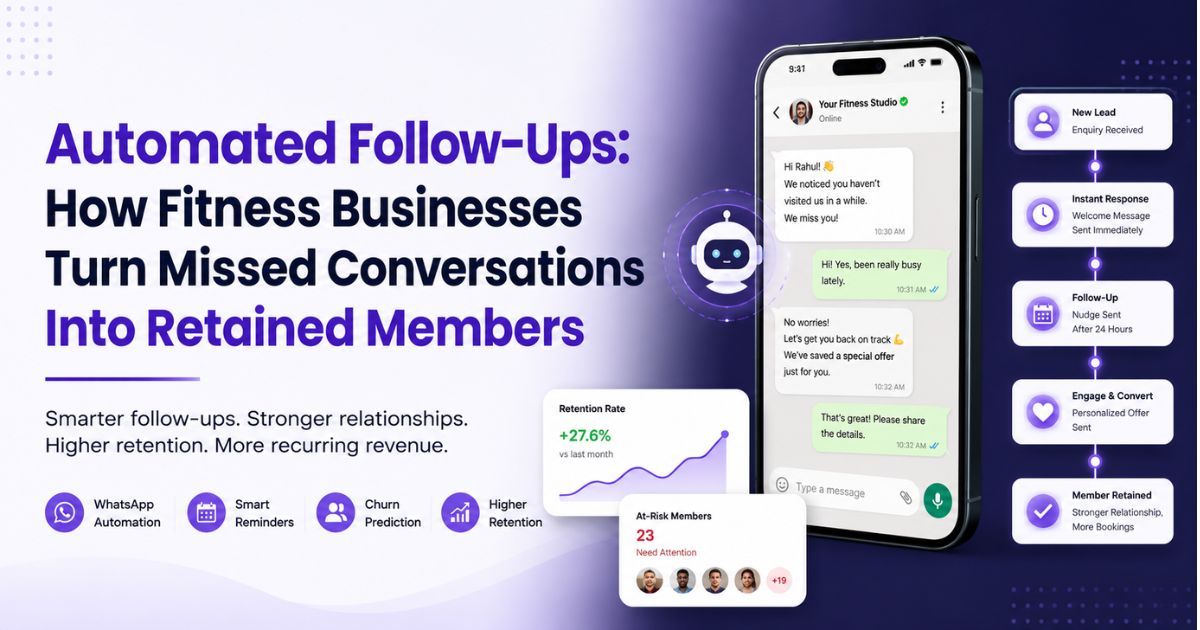
Someone asks about a class but doesn't book. Automated messages: an instant WhatsApp reply → class times sent 2 hours later → a trial offer at 24 hours → one last check-in on day 3.
2. Renewal Reminders
Messages go out 7 days, 3 days, and on the day a membership expires — each one a little more direct, with an easy link to renew or pay.
3. Win-Back Messages
A member hasn't visited in 10–14 days. Instead of a generic message, this one mentions their usual class or trainer and offers to help them get back on track.
4. Payment Recovery
A failed payment or unpaid invoice triggers a friendly reminder with a link to pay — no awkward phone call needed.
5. Booking Reminders
Reminders 24 hours and 1 hour before a class or session, so fewer people forget and leave an empty spot.
6. After-Visit Check-In
A short “how was your session?” message after someone's first visit or trial class. It builds the relationship and catches problems early, before they turn into cancellations.
How AI Makes Follow-Ups Even Better
Basic automation follows simple rules, like “send this message 3 days before expiry.” The next step is adding AI on top of that — which is where platforms like Fitzpot focus a lot of their effort:
• Churn prediction spots members who are likely to cancel, up to 30 days before it happens, by looking at attendance, payments, and engagement — not just one missed visit.
• Campaign suggestions recommend who to message and what offer to send, based on real visit patterns, instead of sending the same message to everyone.
• Anomaly detection notices unusual changes, like a sudden rise in cancellations or a drop in one class, so you can act before it becomes a bigger problem.
This is the difference between sending the same renewal text to everyone, and knowing that one specific member is likely to cancel — and reaching out to them this week with the right message.
Fitzpot also uses AI Marketing Intelligence, which looks at attendance, engagement, and past behavior to suggest the right message, the right audience, the right timing, and the right offer. Instead of sending the same reminder to every member, businesses can send messages that feel more personal — which helps with both engagement and retention.
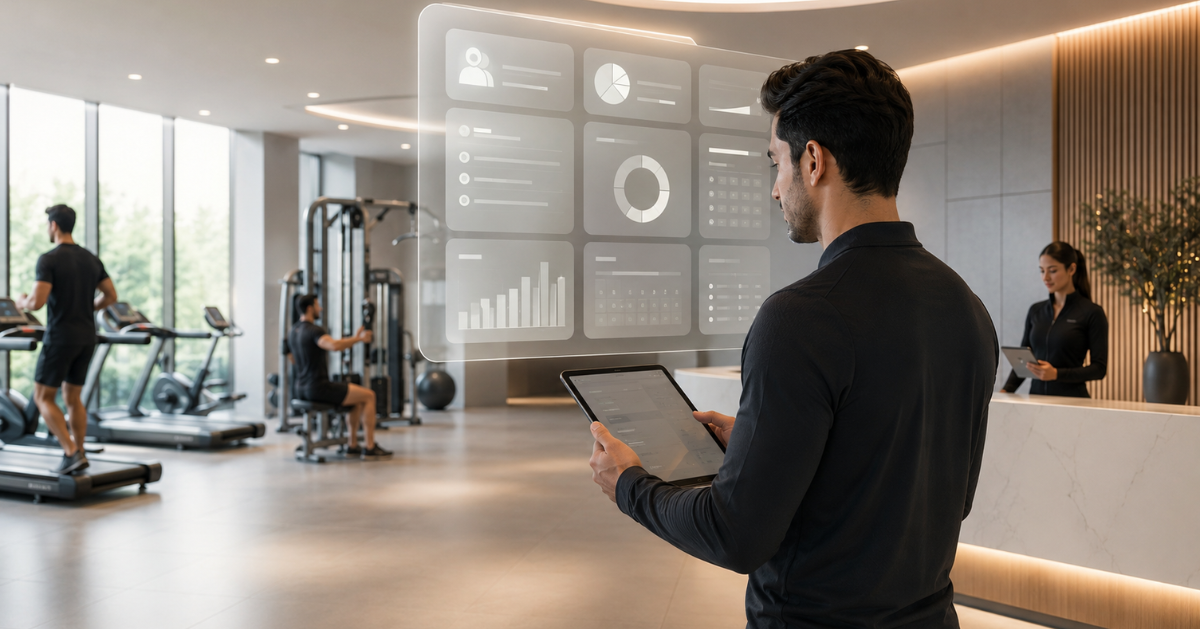
Fitzpot's Relationship Health Score keeps track of how engaged each member is, so businesses can spot members who need attention before they start to pull away.
Every Follow-Up Is Part of a Bigger Journey
Automated follow-ups work best when they're not treated as separate, one-off messages. Instead, each one is part of a longer journey — from the first enquiry and trial, through active membership and renewal, all the way to a long-term, loyal member. Seen this way, communication stays consistent at every stage.
A renewal reminder isn't just a random nudge, and a win-back message isn't a last-ditch effort. Each one is a small step in an ongoing relationship that automation helps keep moving forward.
How to Set Up Automated Follow-Ups: A Simple Starting Point
• Find where people drop off. Where do leads and members actually disappear? A new enquiry, the first week, a renewal date, or after an injury?
• Choose your channel. For most fitness businesses, WhatsApp gets read and replied to more than email or SMS.
• Start with 3-4 message sequences. Renewal reminders, lead follow-up, and win-back messages cover most of what you need — you don't have to automate everything on day one.
• Let your data guide the timing. Use attendance and payment data — or AI churn scores — to send messages based on real signs of risk, not just a fixed date on a calendar.
• Keep a person involved for important cases. Let automation flag the at-risk member; a real conversation is often what actually brings them back.
The Bottom Line
Automated follow-ups aren't about replacing your front desk or your coaches. They're about making sure no lead, renewal, or at-risk member slips through the cracks just because someone forgot to send a message. For a business built on repeat memberships, that's not a nice extra — it's one of the biggest things you can do to protect your revenue and keep members longer.
Platforms like Fitzpot build this directly into the daily tools gyms, studios, and wellness businesses already use — combining WhatsApp automation, membership management, and AI-driven churn prediction so follow-ups happen on their own, at the right time, without adding more work for your team.