Gym Benchmarking: How to Measure and Beat Industry Standards
Gym benchmarking compares your numbers to industry standards. It shows where you stand. It shows where you lose money. It shows what to fix first.
Most gym owners know their revenue. Few know how it compares to other gyms. That gap is where growth gets lost.
This article covers the metrics worth tracking. It covers how to think about industry benchmarks. It also covers how AI Business Intelligence makes the process automatic, not manual.
What Is Gym Benchmarking?
Gym benchmarking means you measure your performance against a standard. That standard can be:
• Industry averages for your business type
• Your own past performance
• Top branches in a multi-location chain
• Competitor pricing and retention data (where available)
A 70% renewal rate can feel fine on its own. But other gyms may perform much higher. That gap changes how fast you act.
Key Metrics Every Fitness Business Should Benchmark
Not every number matters the same. Focus on the ones that predict revenue. Don't just track ones that describe it.
• Member retention rate — the percent of members who renew each cycle
• Revenue per member — average monthly revenue divided by active members
• Class or slot utilization — how full your classes or slots run
• No-show rate — missed bookings as a share of total bookings
• Lead-to-member conversion rate — trial sign-ups that become paid members
• Staff utilization — trainer hours booked versus hours available
• Average client lifetime value (LTV) — total revenue a member brings before leaving
Each metric tells part of the story. Together, they show if a business is healthy. Or just busy.
How to Think About Industry Benchmarks
Industry benchmarks change by business model. They change by market, price, and membership type. No single number fits every gym or studio.
Use outside benchmarks as reference points. Don't treat them as fixed goals. Compare them to your own history. Compare them to your best locations. A weak number against one average might be strong for your market. The reverse is true too.
Your own trend line matters most. Track it every month.
Why Manual Benchmarking Fails Fitness Businesses
Spreadsheets can hold benchmarking data. But they go out of date fast.
• Numbers get pulled once a month, if at all
• Different staff track different metrics in different formats
• Churn shows up in reports after members already left
• There's no way to compare branches side by side in real time
Manual tracking answers "what happened." It rarely answers "what's about to happen." That gap costs you revenue.
How AI Business Intelligence Makes Benchmarking Effortless
This is where Fitzpot differs from normal reporting. Normal reporting shows what already happened. Business Intelligence explains why it happened. And it predicts what comes next.
Fitzpot's AI Business Intelligence pulls attendance, billing, bookings, and engagement into one system. It supports benchmarking through:
• Predictive Analytics forecasts renewals, attendance, and revenue. It uses current trends. You benchmark against your own future, not just the past.
• Relationship Health Score (RHS) combines attendance, booking frequency, and messages. It flags members who are drifting away. It flags them before they stop showing up.
• AI Business Intelligence goes beyond old dashboards. It forecasts revenue. It spots churn risk. It surfaces new pricing, campaign, and growth ideas.
• AI Recommendation Engine looks at client history and habits. It suggests follow-ups, packages, or services. These are personal, not generic.
• Workforce Intelligence helps you track staff workload and utilization. It helps you spot staffing problems early.
• Individual Wellness Score and Corporate Wellness Score show a benchmarked view of engagement over time.
• AI Wellness Companion keeps the client journey moving. It sends reminders, follow-ups, and renewal prompts. Retention improves. You don't have to chase clients by hand.
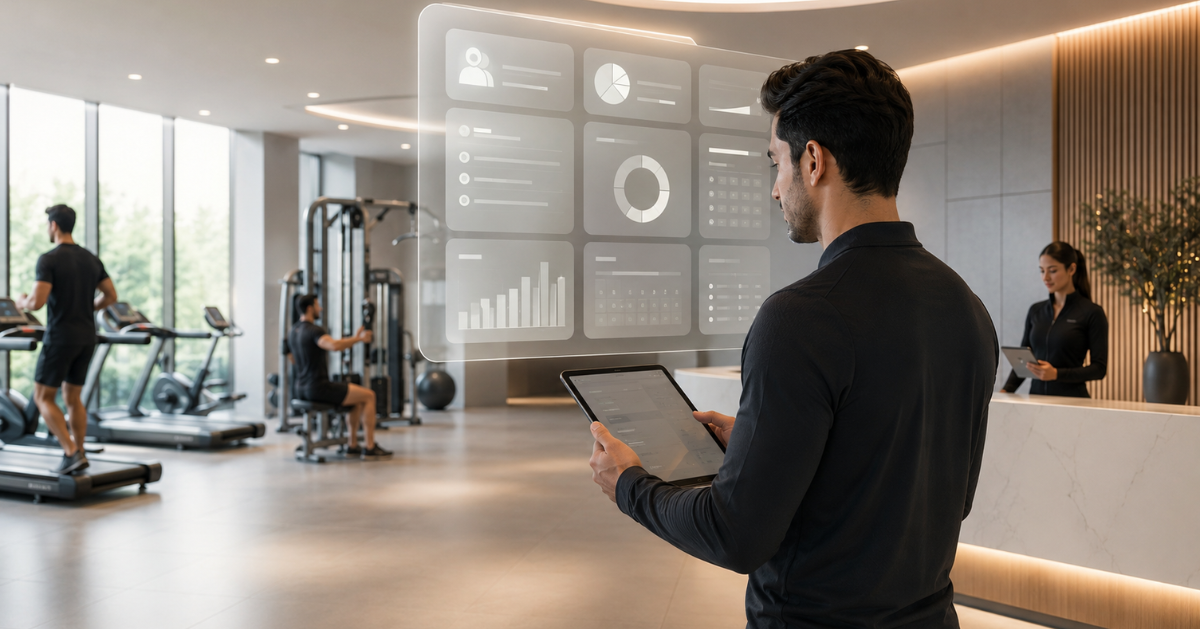
Fitzpot brings these signals into connected dashboards. They cover revenue, members, retention, classes, staff, and multi-location data. Owners get a full view of business health.
Fitzpot's planned Benchmarking Platform will compare your business to industry peers. Its current tools focus on dashboards, analytics, and AI insights. This groundwork will make peer benchmarking possible when it rolls out.
What a Modern Unified Platform Brings to Benchmarking
A modern AI-powered platform does more than store numbers. It gives them meaning.
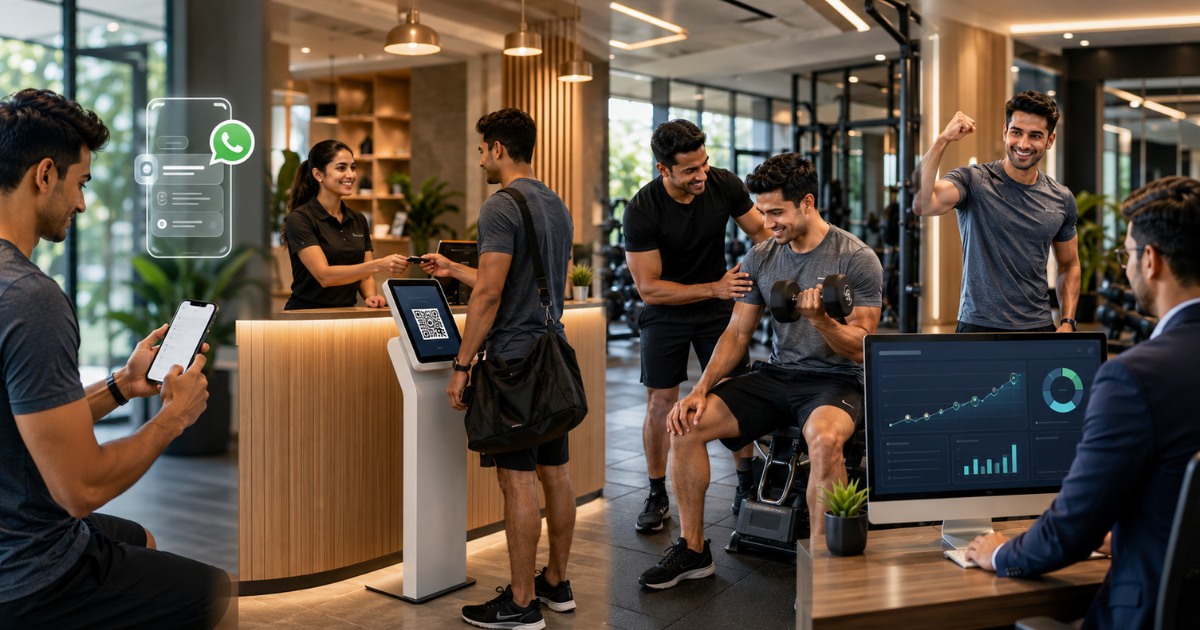
Picture five separate tools: a booking app, a spreadsheet, a WhatsApp group, a payment gateway, and a review dashboard. Now picture one system instead. It holds every data point that feeds a benchmark. That means:
• Retention, revenue, and utilization update in real time, not monthly
• Multi-branch chains compare locations instantly
• Alerts fire when a metric moves against your baseline, not after the fact
• The Marketplace layer adds retail, packages, and workshop sales. Benchmarks then reflect your full business, not just memberships.
This is the real difference. One platform just reports numbers. The other acts on them.
Steps to Start Benchmarking Your Fitness Business
1. Pick five core metrics — retention, revenue per member, utilization, no-show rate, conversion rate
2. Pull your last 90 days of data for each metric
3. Look up rough industry ranges for context, not as a strict target
4. Set internal benchmarks based on your best month or branch
5. Automate tracking through a connected platform, so numbers update on their own
6. Review monthly. Act early on any metric that drifts from your baseline.
The Bottom Line
Gym benchmarking turns guesswork into a plan. It tells you if a slow week is normal. Or if it's a warning sign. Businesses that track it catch problems early. They also catch new opportunities early.
Fitzpot brings every benchmark that matters into one platform. That includes retention, revenue, utilization, and staff performance. Owners see clearly where the business stands today. And where it's headed next.
Its planned Benchmarking Platform will take that further. It will let you compare directly with industry peers.